
Jurupa Valley City Directory Holdings
A Jurupa Valley city directory collection is really a regional shelf. The incorporated city dates from July 1, 2011, so an older volume is unlikely to use Jurupa Valley as its municipal title. Riverside Public Library Local History Archives, branch catalogs, and regional telephone holdings are the right starting points. Ask staff to search the community names and street, not just the present city name. The archive address is 3900 Mission Inn Avenue in Riverside, and its catalog can lead to directories, maps, indexes, and newspapers.
| Collection | Years | Where Held | Access |
|---|---|---|---|
| Riverside-area city and county directories | Exact Jurupa-community runs are not published online | Riverside Local History Archives and catalog | Holdings inquiry; read in person |
| Reverse or criss-cross directories | Exact years are not published online | Riverside archive and branch catalog inquiry | Address-to-occupant research in person |
| Telephone books | Exact runs are not published online | Regional library and archive collections | Browse by surname or street after confirming the run |
| Press-Enterprise microfilm | Historic run; dates depend on the catalog | California State Library through interlibrary loan and Riverside archive help | Obituaries, notices, and address clues |
| Sanborn and regional maps | Maps are available; Jurupa sheet years are not verified | Riverside Local History Archives resources | Building and street context, not a resident roll |
No official digitized scan of a Jurupa Valley-named city directory, no verified local year run, and no public publisher list was located. That gap matters. A search result that promises a complete year-by-year archive would be overstating the evidence. The archive can confirm title-page dates, publisher, call number, coverage statement, and missing years. Record those details before moving to a personal entry or a street section.
Jurupa Valley's Older Directory Gap
Riverside County was formed in 1893, but Jurupa Valley became the county's 28th city only on July 1, 2011. Before incorporation, permits and planning files were generally county records, while directories followed the names used by publishers and postal communities. A book printed before 2011 may place a Jurupa household in Riverside, a county section, or a named community. The absence of a “Jurupa Valley” heading does not show that the household was absent.
The catalog key should preserve the historical jurisdiction. Search the title page, alphabetical section, street section, and index for each older label. Keep the original wording in notes, because a later researcher may need to repeat the same search in a different volume. Modern city boundaries can help locate the parcel, but they cannot rewrite the way an earlier directory described the place.
| 1893 | Riverside County was formed from parts of San Bernardino and San Diego Counties. |
|---|---|
| 1948 | Louis Robidoux Library began as a Rubidoux storefront branch. |
| 1995 | Glen Avon Regional Library opened its current 20,000-square-foot facility. |
| 2010 | The present Louis Robidoux Library building opened with room for about 70,000 items and 42 public computers. |
| 2011 | Jurupa Valley incorporated on July 1, creating a new city record series. |
Catalog myth. “Not online” does not mean “destroyed.” The local directory gap calls for a holdings question, a reading-room visit, or a library loan request.
Seven Community Names for Jurupa Valley Directories
Run the name crosswalk before judging a search as empty. The present city joined long-established communities, and a volume may sort them as separate sections or fold them into a broader Riverside County listing. These labels are useful catalog and OCR terms:
- Rubidoux
- Mira Loma
- Glen Avon
- Pedley
- Sunnyslope
- Belltown
- Jurupa Hills
Keep the spelling and the year together. A street can appear under a community heading in one volume and under Riverside or a county suburban section in another. The city name also existed as a regional phrase before incorporation, so a hit for Jurupa Valley may describe geography rather than a legal city government. A community label narrows the shelf; it does not by itself prove a person's address.
Jurupa Valley Directory Library Starting Points
The two Jurupa Valley branches provide practical catalog and database access, even though the deeper historical collection sits in Riverside. Glen Avon Regional Library is at 9244 Galena and can be reached at 951-685-8121. Its current 20,000-square-foot building opened in 1995. The branch is especially valuable for local context because it keeps documentation on the Stringfellow Acid Pits, a place-specific collection that can connect public agencies, property owners, consultants, and community participants. The Riverside County library history page supplies the branch-history context.
Louis Robidoux Library is at 5840 Mission Boulevard and its phone is 951-682-5485. It began in a Rubidoux storefront in 1948, moved several times, and opened its present 20,000-square-foot building on April 17, 2010. The building was planned for about 70,000 items and 42 public computers. Ask either branch to search its catalog for older community names, Riverside directories, telephone books, yearbooks, or a referral to the archive.
The library name preserves “Robidoux” because it honors Louis Robidoux. The community name is “Rubidoux.” That distinction is more than a spelling lesson: it affects catalog terms, OCR, subject headings, and the wording used in a reference request.
Information about branch addresses and phones is available through the Riverside County library locations listing. The branch view helps with access planning; it does not replace confirmation of a specific directory's year or call number.
For a visual starting point, the library locations source captured for the Jurupa Valley directory shows the branch network and location context.
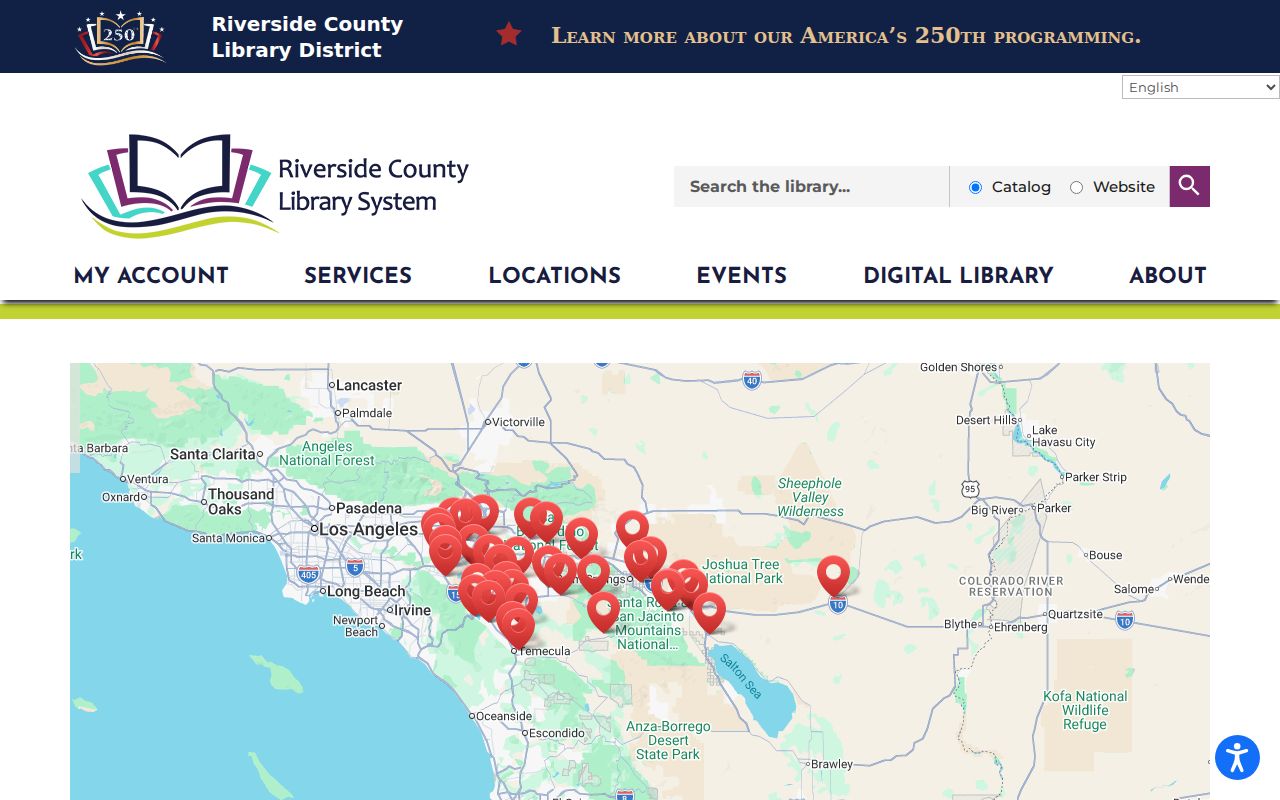
The branch map reinforces the two-step route: use a nearby Jurupa branch for catalogs and databases, then ask the regional archive for the older volume itself.
Jurupa Valley Directory Archive Hours
The Riverside Public Library Local History Archives is the most useful regional shelf for a Jurupa Valley directory question. The official hours listed are Tuesday through Thursday from 2 to 6, Friday and Saturday from 2 to 5, and Sunday by appointment. Call 951-826-5301 before traveling. Staff can help with digitized collections, book indexes, local bibliography, maps, Sanborn maps, and an obituary request.
Obituary research is handled as a reference service, not as a free-standing public name roll. Ask for the person's full name, likely community, approximate death date, and any known newspaper clue. Press-Enterprise microfilm can be borrowed through California State Library interlibrary loan, with the local archive or a branch helping identify the right request. Microfilm may supply a death notice, marriage announcement, address, or relative that links one directory entry to the next.
Before a visit, ask which Polk, Riverside County, telephone, rural-route, reverse, or criss-cross directories include Rubidoux, Mira Loma, Glen Avon, Pedley, or Sunnyslope. Ask for inclusive years, gaps, digitization status, title, publisher, and call number. That question is more useful than asking for a generic Jurupa Valley directory.
The Riverside Local History Archives source captured for the Jurupa Valley directory research shows the reading-room route and reference contact.
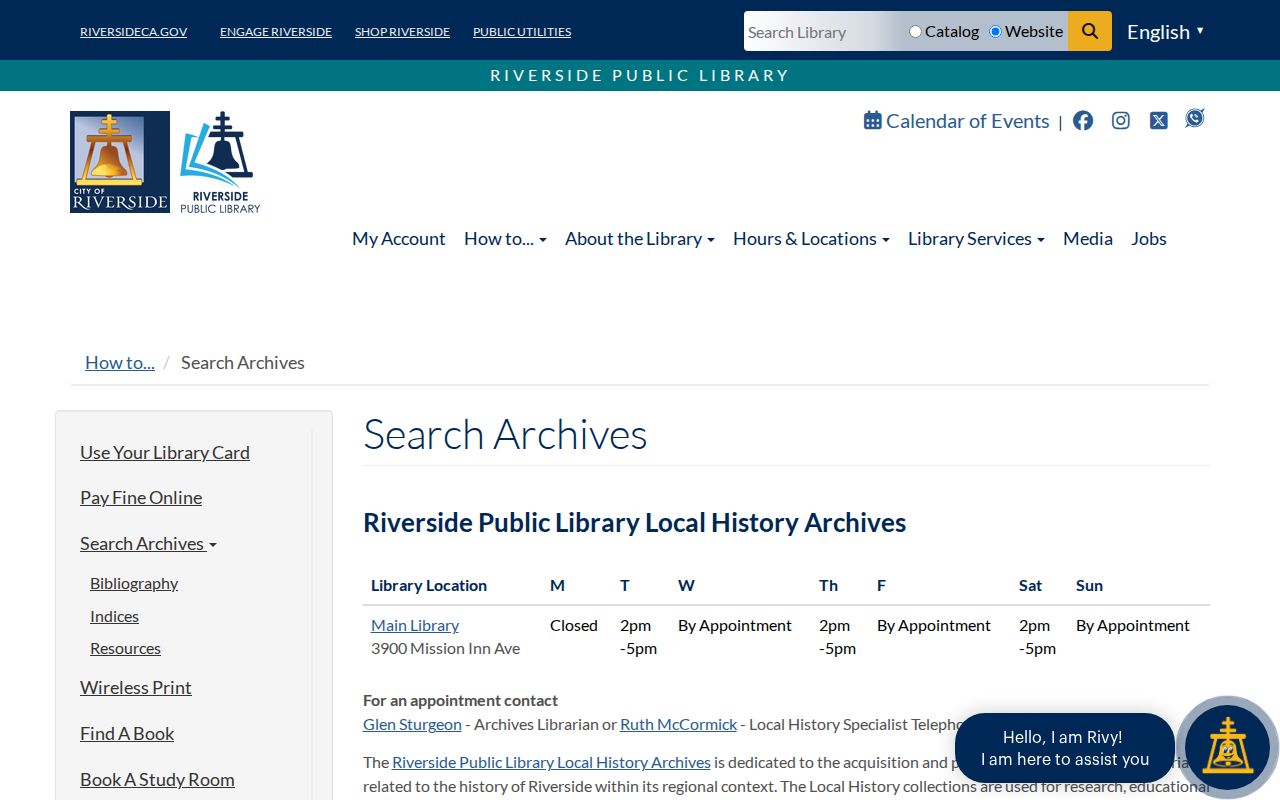
The image points to the fallback that remains available when no official scan or exact online year list exists: ask the archive, confirm the volume, and inspect the physical entry.
Reading a Jurupa Valley Directory Entry
Do not quote a sample Jurupa Valley city directory entry until the actual volume is open. No official online scan of a local entry was located. A typical Polk or Riverside-area entry can contain a surname and given name, a spouse in parentheses, an occupation, a home address, and an abbreviation that only makes sense after the key is read. Some publishers also mark an owner or occupancy status. Those marks vary by year and must be copied as printed.
| Name | Head of household; a spouse may appear in parentheses, with widow notation in some runs. |
|---|---|
| Occupation | Trade or role, sometimes paired with an associated business description. |
| Address | House number and street, with residence or boarding abbreviations where the publisher used them. |
| Occupancy mark | An owner or other household-status symbol, only where that volume defines one. |
| Abbreviation key | The publisher's legend for short forms, street terms, and entry symbols. |
- Criss-cross directory
- A street-order section that starts with an address and names the listed occupant, instead of starting with a surname.
- Householder index
- An index organized around the person treated as the household head by that publisher.
- Abbreviation key
- The volume's legend. Photograph or transcribe it before reading entries, because a short mark can change the meaning of a line.
Read the alphabetical entry first, then turn to a street or reverse section if the volume has one. Compare the address with a map or deed only after preserving the printed form. A person may be listed under a business address, a spouse may be the only indexed name, and a telephone subscriber may represent one household rather than every adult who lived there.
When the directory clue needs a present-day parcel check, the modern address trail belongs in the Jurupa Valley by-street records search. The historical entry remains the evidence for its own publication year.
NARA Beside a Jurupa Valley Directory
Federal records can fill the gaps around a directory. The National Archives at Riverside genealogy page describes census microfilm and databases, southern California land, district-court, naturalization, military, and immigration holdings. The research room is at 23123 Cajalco Road in Perris, with the listed phone 951-956-2000. Census schedules through 1950 can supply household members, relationship, occupation, and a household-tenure response for the historic enumeration area.
The federal shelf is not a substitute for a local directory. It uses enumeration geography and release rules, while a directory uses publisher coverage and a yearly canvass. Pair the two rather than forcing one to answer the other's question. For current population context, the Census QuickFacts entry for Jurupa Valley should be read with its stated year rather than mixed with an older schedule.
The NARA naturalization finding aid captured for the Jurupa Valley directory research shows why an older name may surface in a federal rather than municipal source.
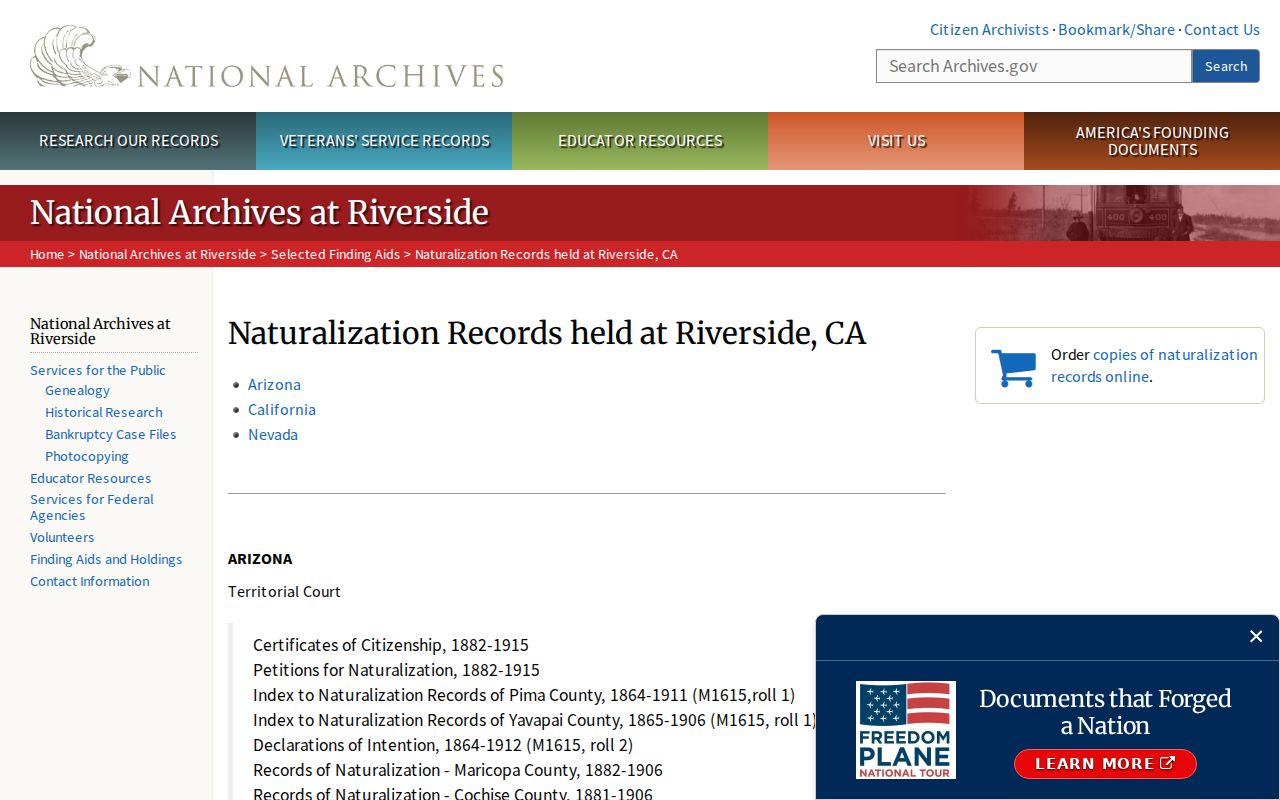
NARA Riverside identifies Central District naturalization indexes from 1887-1931 and 1915-1976, with petitions from 1887-1991. A petition can add former nationality, residence, and dates that help separate two people with the same name.
The NARA Riverside genealogy source also shows the federal research-room path for census and regional collections.
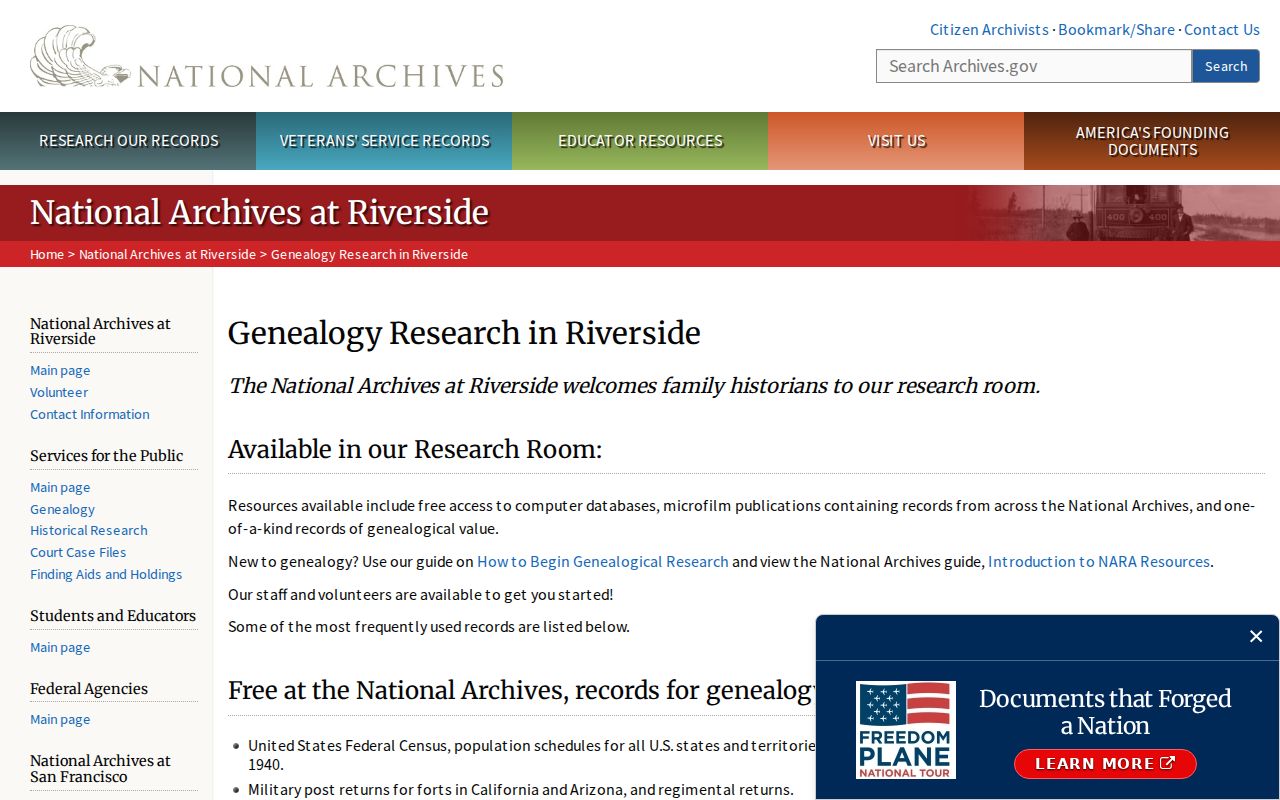
Use the federal clue as an identity anchor, then return to the archive shelf to test the matching directory entry, street, spouse, or community label.
Jurupa Valley Maps, Sanborns, Stringfellow
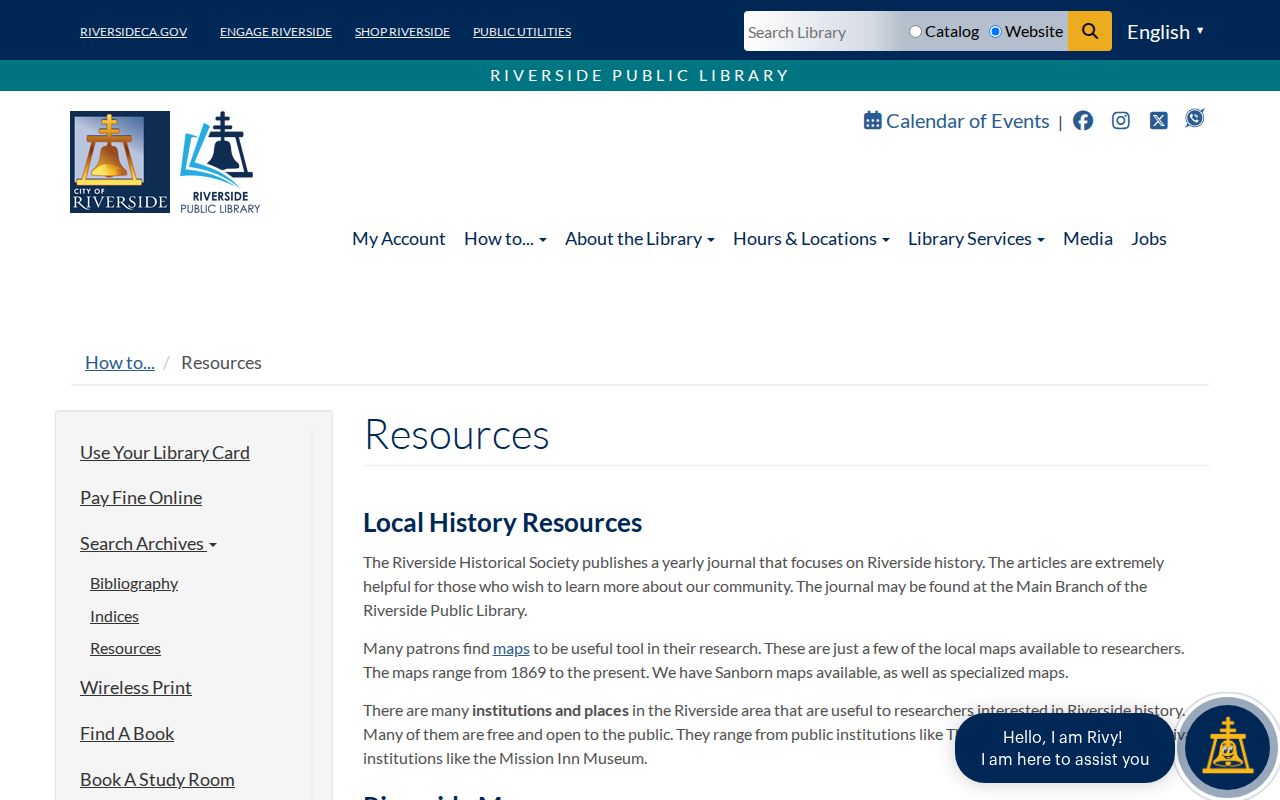
Maps help explain a directory address without pretending to name every resident. Riverside Local History Archives resources include local maps from 1869 forward and Sanborn maps. The available research confirms the map resources, but not the exact Jurupa-specific sheet years. A Sanborn sheet can show a building footprint, use, street shape, or change in the built environment. It normally does not establish who occupied a room.
The archive resources page is the source to consult before requesting a map. Ask for the sheet date, coverage area, street spelling, and whether the address falls on a sheet. Compare the footprint with the directory address, a deed legal description, or a permit record. A matching structure strengthens a timeline; it does not turn a map label into a resident fact.
The map and Sanborn source captured for the Jurupa Valley directory research illustrates the regional material available through the archive.
Glen Avon's Stringfellow Acid Pits documentation adds a different local layer. Reports, maps, hearings, and related papers can name property owners, officials, consultants, and affected community participants. Use those names for civic and place history, and verify them against the record that created each name.
Robidoux or Rubidoux in Jurupa Valley Directories
Search both spellings every time. Rubidoux is the historic community label. Robidoux is the spelling tied to Louis Robidoux, the person honored by Louis Robidoux Library. A directory, catalog record, OCR layer, newspaper notice, or library history entry may use one and not the other.
Keep a two-column note with the exact printed form and the normalized search form. Do not silently “correct” an old entry. Try the community name in one query, the library or person spelling in another, and then add Riverside County or the street. This small crosswalk often explains why a name appears missing from a directory search.
Archive tip. Ask staff to search Rubidoux and Robidoux separately, then check whether OCR has confused the two spellings.
Trace Jurupa Valley Households Through Directories
A useful household trail moves from the first reliable entry to the next confirmed year, then checks the gaps with a census, deed, map, obituary, or probate record. Use the directory for the publication-year clue and the other record for a separate date or relationship. A disappearance is not proof of a move. A directory canvass can miss a household, print a name late, change its community section, or omit a person who was not the indexed householder.
- Identify the historic community and the street spelling used in the likely volume.
- Ask the archive for the nearest directory year and record its title, publisher, coverage statement, and call number.
- Read the alphabetical entry, then the street or criss-cross section if present, and copy the abbreviation key.
- Move forward and backward one year at a time, recording every address, spouse marker, widow notation, and absence.
- Pair directory years with the 1950 or earlier census schedule, using household relationship and enumeration geography as separate checks.
- Use deeds, permits, maps, obituaries, or probate to explain an address change, title transfer, death, or heir trail.
Press-Enterprise microfilm and the archive's obituary request service can close a life-history gap, while NARA can test a census or naturalization clue. When a historical household needs a current identity check, the Jurupa Valley resident search keeps court, vital, voter, business, and license records in their proper roles. The old directory still stands on its own terms: it records what a publisher listed, in a named place, for a named year.