
Sources for Jurupa Valley Previous Residents
One address can have a long title history but a short paper trail for the people who occupied it. The era table separates the record keepers and shows why the strongest search moves from current parcel evidence to older county books, then to library and federal collections. Exact Jurupa Valley city-directory and reverse-directory year runs were not published in the available official sources, so those rows are a holdings question rather than an invented date range.
| Source | Years It Covers | Where Held | What It Shows |
|---|---|---|---|
| ACR recorder index | 1974 to present online | Riverside County ACR | Recorded parties, instrument class, date, number, and legal-reference trail |
| Older deed books and indexes | Before 1974 | ACR counter, filmed books, archives, or FamilySearch catalog | Earlier grantor-grantee links and legal descriptions |
| City permits and planning files | Mostly post-2011 city era; availability varies | Jurupa Valley Accela, monthly PDFs, Record Library, or CPRA | Work dates, project roles, APNs, contractors, and decisions |
| City, telephone, and criss-cross directories | Exact local runs not published | Riverside Public Library Local History Archives | Address-to-occupant, telephone, spouse, and occupation clues when printed |
| Federal census | Public schedules through 1950 | NARA, libraries, and research databases | Household members, relationships, occupation, and ownership or tenure response |
| Sanborn maps | Maps available; Jurupa sheets and years unverified | Riverside Public Library Local History Archives | Building footprint, use, and structure context, not a resident list |
| Press-Enterprise and obituaries | Historic run; exact dates by catalog | RPL archive or California State Library interlibrary loan | Residence, kin, announcements, and a life-trail endpoint |
| Probate and distribution deeds | Case coverage varies; most probate online from July 1994 | Riverside Superior Court and ACR | Heirs, petitions, estate transfer, and successor title evidence |
Start with the question’s era. Current ownership begins with the APN and deed. A mid-century household needs directories and census schedules. A deceased owner may be followed through an obituary, probate case, and distribution deed. A permit helps date a structure, while a Sanborn map can show its footprint. The previous residents of a place emerge when two or more dated sources agree.
The Riverside County ACR forms page illustrates the county’s separate request paths for official records and vital products.
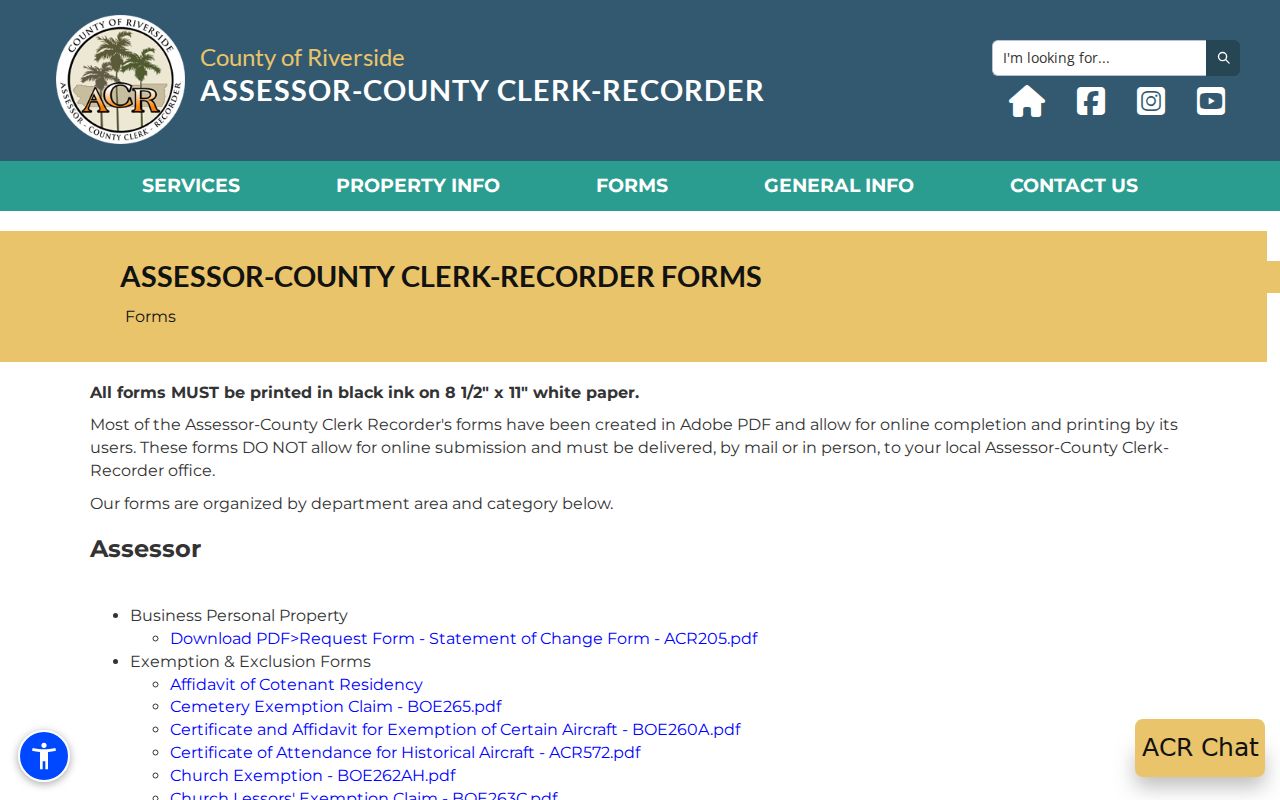
The forms route matters when a title image, older index, or related county record is not exposed by the online search. Keep the requested record type and date range narrow.
Keep Jurupa Valley Title and Occupancy Parallel
Title and occupancy overlap, but they are not the same chain. A family trust, corporate owner, absentee mailing address, or recorded lender can place a name in the title file without placing that person in the household. A directory or census entry can show a household without proving who held the deed. Preserve both trails, mark the date for each entry, and join them only when the underlying source supports the connection.
Title chain: APN and legal description → acquisition deed → grantor and grantee → earlier conveyance → older deed book or map reference. Record the instrument type, recording date, document number, and party role at every step.
Occupancy chain: reverse directory → telephone or city directory entry → census household → permit or map context → obituary, probate, or later directory appearance. Record whether the entry is a home address, business address, subscriber, householder, spouse, widow marker, or another published notation.
This parallel method prevents a recent permit applicant from replacing an earlier household and prevents a mailing address from being treated as the physical residence. It also leaves room for a vacant interval, a demolished structure, or a publication gap.
Start With the Jurupa Valley APN
Normalize the street address before searching a deed. Riverside County’s property portal and the city or county GIS viewers can supply the APN, situs, subdivision reference, and available parcel facts. Note corner locations, rear lots, private roads, unit numbers, and lot-line changes. A current APN can differ after a subdivision or adjustment, so the legal description and recorded map are the continuity check.
The current owner and legal description lead into the Riverside County ACR index. The assessor portal is parcel-oriented, and an unrestricted public owner-name search was not verified. A property card can show disclosed owner or mailing fields, but it does not identify every household member or prove present occupancy.
The Riverside County Assessor-County Clerk-Recorder office is the county custodian for the property, recorder, clerk, and vital-record routes described in the research.
Use a parcel identifier to reduce same-name errors. If the current card shows a mailing address outside the situs, treat that as an absentee-owner clue, not as proof that the owner lived elsewhere during every earlier year.
Walk the Jurupa Valley Deed Chain Backward
Riverside County recorder documents are indexed online from January 1, 1974. Search the current owner as grantee for the acquisition instrument, inspect its seller, then search that seller as grantee for the earlier acquisition. Keep the same legal description in view. The process is a chain of title, meaning a sequence of recorded transfers, not a list of everyone who used the house.
- Normalize the address and write down the APN, legal description, and current owner or mailing fields.
- Search the ACR index by party name, recording date, document type, or known document number.
- Read the deed image or order a copy, then record grantor, grantee, date, number, and legal description.
- Search the seller as an earlier grantee and compare the legal description before accepting the match.
- Repeat to the online boundary, then move to office indexes, filmed books, or archival catalog work.
- Grantor and grantee
- The grantor conveys or releases an interest; the grantee receives or records that interest. A document can have several roles.
- Chain of title
- The linked sequence of instruments used to follow an interest in the same land across transfers.
- Legal description
- The lot, block, subdivision, map, or metes-and-bounds language that anchors land more reliably than an old street number.
Search exact recorded name forms first. A quitclaim, trust transfer, reconveyance, lien, or deed of trust can change the index without representing a normal sale or a new household. The instrument image and parcel description resolve that ambiguity.
Jurupa Valley Records at the 1974 Cutoff
The January 1, 1974 recorder cutoff is the key handoff in an older house history. Clerk documents reach January 1, 1893, but the online recorder trail does not reach that far. When a deed chain stops, ask ACR about office indexes and books, filmed records, copy rules, and any predecessor-county routing. A missing online hit is an access gap, not evidence that the deed vanished.
Use a mail or counter request when the volume is not online, and call ACR at 800-696-9144 or 951-486-7000 on weekdays from 8 to 5 for routing help. Save the last confirmed party names and legal description before switching methods. FamilySearch catalog work and regional archives can supplement, but the county custodian remains the authority for a certified copy.
Note: A dated legal description is a better handoff to older books than a street number copied from a modern parcel card.
Jurupa Valley Vital Index Limits
Vital records can close a life trail, but California does not provide a simple open genealogy index after a set number of years. Riverside ACR and the California Department of Public Health issue birth, death, and marriage records under authorized and informational-copy rules. Comprehensive vital indexes are confidential under Health and Safety Code section 102230. Confidential marriage and sealed adoption material remain restricted.
The California law on comprehensive vital-index confidentiality explains why a name search cannot promise a statewide list. An informational death copy may help confirm an event, while an authorized copy requires eligibility and the correct sworn or notarized process. In 2026 the CDPH fee listed in the research is $26 for a death record; verify the current amount before mailing.
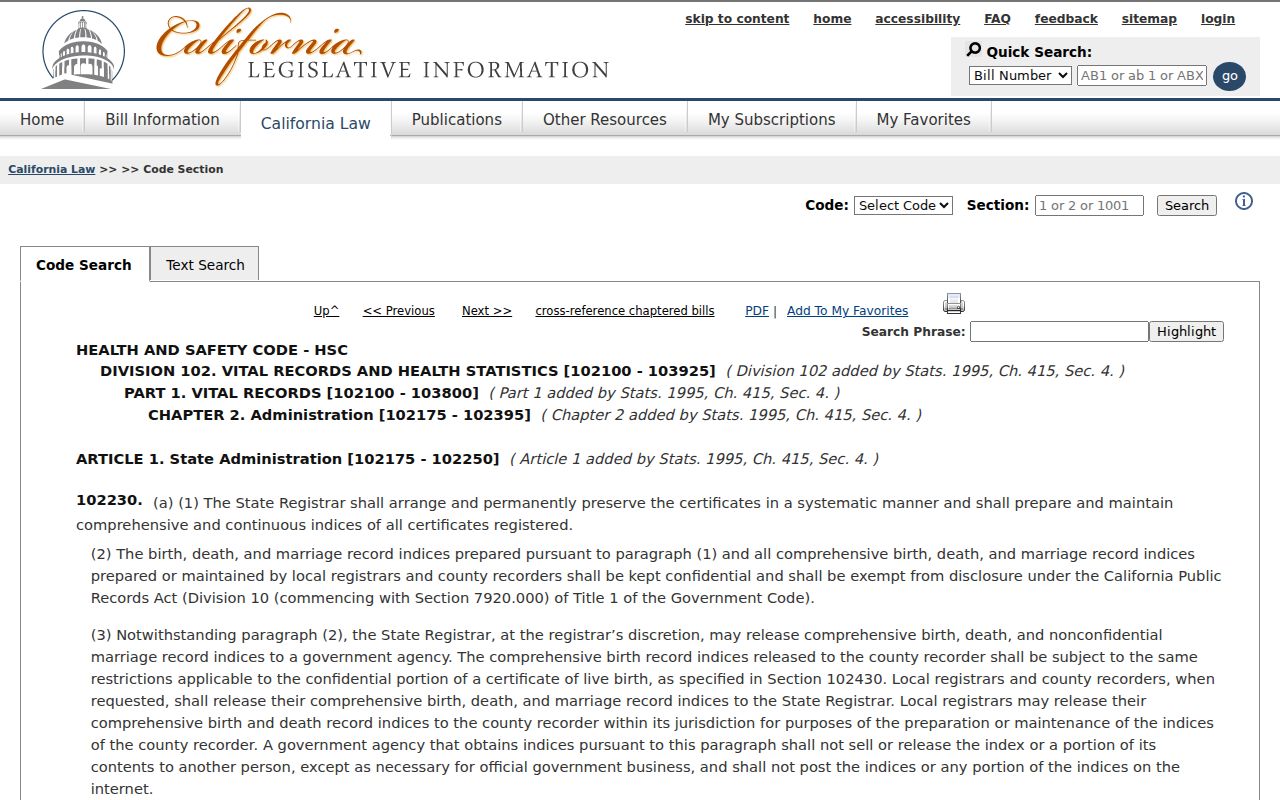
The image reflects the legal boundary around comprehensive indexes. Use an obituary, cemetery clue, or probate case as a lead, then request the appropriate record rather than trying to bypass the access rule.
Jurupa Valley Directories Beside the 1950 Census
The household layer comes from older directories and census schedules, not from the current assessor. Because the legal city began in 2011, search Rubidoux, Mira Loma, Glen Avon, Pedley, Sunnyslope, Belltown, Jurupa Hills, Riverside city, and Riverside County as separate catalog clues. Exact local directory runs and a verified digitized Jurupa Valley entry were not located in official online sources. Ask the Riverside Public Library Local History Archives which volumes include the community and street.
- Choose the nearest directory year and inspect the title page, coverage statement, publisher, and abbreviation key.
- Read the alphabetical entry, then a street or reverse section if the volume has one. Separate a home address from a business address.
- Pair the directory date with the nearest census schedule. The newest public federal population schedule is 1950 under the 72-year release rule.
- Compare household relationships, ownership or tenure response, occupation, and address wording without modernizing the publisher’s spelling.
- Check the next directory, an obituary, probate, deed, permit, or map before deciding that a missing entry marks a move.
The Riverside Public Library Local History Archives offers staffed research help, digitized collections, maps from 1869 forward, Sanborn resources, indexes, and obituary assistance. Press-Enterprise microfilm can be requested through California State Library interlibrary loan. The collection shelf and entry-reading method are developed in the Jurupa Valley city directory collections.
House-history use. A directory absence is an absence from that publisher’s canvass, not proof that the house was empty or that a household had left.
Sanborn Maps Date a Jurupa Valley House
Sanborn maps can show a structure’s footprint and use, but the available research did not verify Jurupa-specific sheet years. Treat a map as building context, not a named resident source. A demolition, rebuild, addition, or lot-line adjustment can make one situs cover more than one structure across the previous residents timeline.
City Accela and monthly permit registers are strongest in the post-2011 city era. They can show permit number, issued date, project type, address, APN, description, contractor license, job value, and opened date. Earlier permits may route through Riverside County. A reroof, HVAC, water-heater, or sign permit dates work and identifies a project role; it does not set a move-in date.
Compare a permit with the APN, planning packet, subdivision map, and directory entry. Keep applicant, owner, contractor, and representative labels intact. This is a useful insider check because a building record can confirm that a structure was active while leaving the household question open.
Jurupa Valley Obituaries and Probate Endpoints
Obituaries can connect a former address to a spouse, parent, child, funeral notice, or later community. The Riverside archive accepts obituary requests, and Press-Enterprise microfilm is available through interlibrary loan. Read the notice as a lead, then compare the named relationship and place with a death record, deed, or probate filing. A newspaper statement is not the same as a certified record.
Riverside Superior Court keeps probate cases, not the County Clerk. Most probate cases are online from July 1994, with older or missing matters routed to the clerk. A petition, notice, final distribution, or distribution deed may identify heirs and a successor interest. Use the case number when available, and do not infer a present address from an old estate filing.
The heir-finding chain is: obituary or cemetery clue → probate index → case number and register → final distribution → recorded deed. The names in those documents are evidence of a legal or family event, not an invitation to contact living relatives.
Historic Community Names in Jurupa Valley
Jurupa Valley’s legal city name is newer than many of its neighborhoods. The city incorporated from established communities on July 1, 2011, so older directories, permits, census schedules, and newspaper notices may use Rubidoux, Mira Loma, Glen Avon, Pedley, Sunnyslope, Belltown, or Jurupa Hills. Retain the old label beside the modern city name instead of replacing it during transcription.
The spelling pair Rubidoux and Robidoux is a practical catalog issue. Rubidoux names the community; Louis Robidoux is the person honored by Louis Robidoux Library. Search both spellings, along with Riverside city and county references. A historical “Jurupa Valley” hit may be a regional phrase rather than evidence that a municipal record existed before incorporation.
When a street number or road name looks different, compare the tract, lot and block, APN, legal description, recorded map, and council or road file. No official citywide street-renumbering year was located, so a crosswalk should show the evidence and any remaining gap.
Request Missing Jurupa Valley Records
The city CPRA route is useful for a permit register, planning file, council packet, correspondence, deed or easement record, lot-line adjustment, or right-of-way document that is identifiable but not online. The City Clerk is at 8930 Limonite Avenue, Jurupa Valley, California 92509, phone 951-332-6464. The city public-records request form asks for requester contact details, a description with subject and date range, the choice to view or receive copies, copy quantity, signature, and date.
The California Public Records Act inspection and copy rule permits inspection and copies of identifiable nonexempt records, subject to exemptions and direct duplication costs.
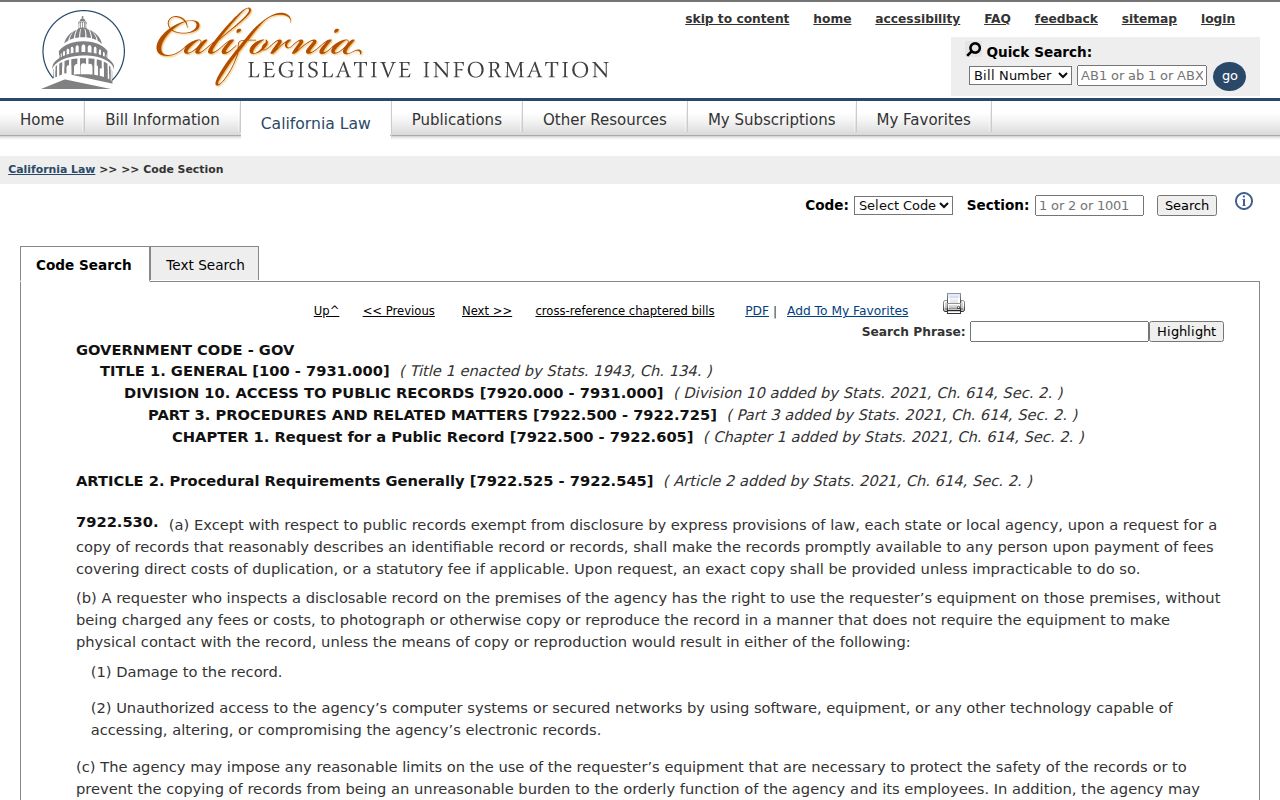
Under Government Code section 7922.535, an agency normally determines within 10 days whether responsive records exist and may extend that determination by up to 14 days for unusual circumstances. The agency need not create a new record or answer an open-ended research question.
The California Secretary of State CPRA request guidance explains requester, timing, and fee principles.
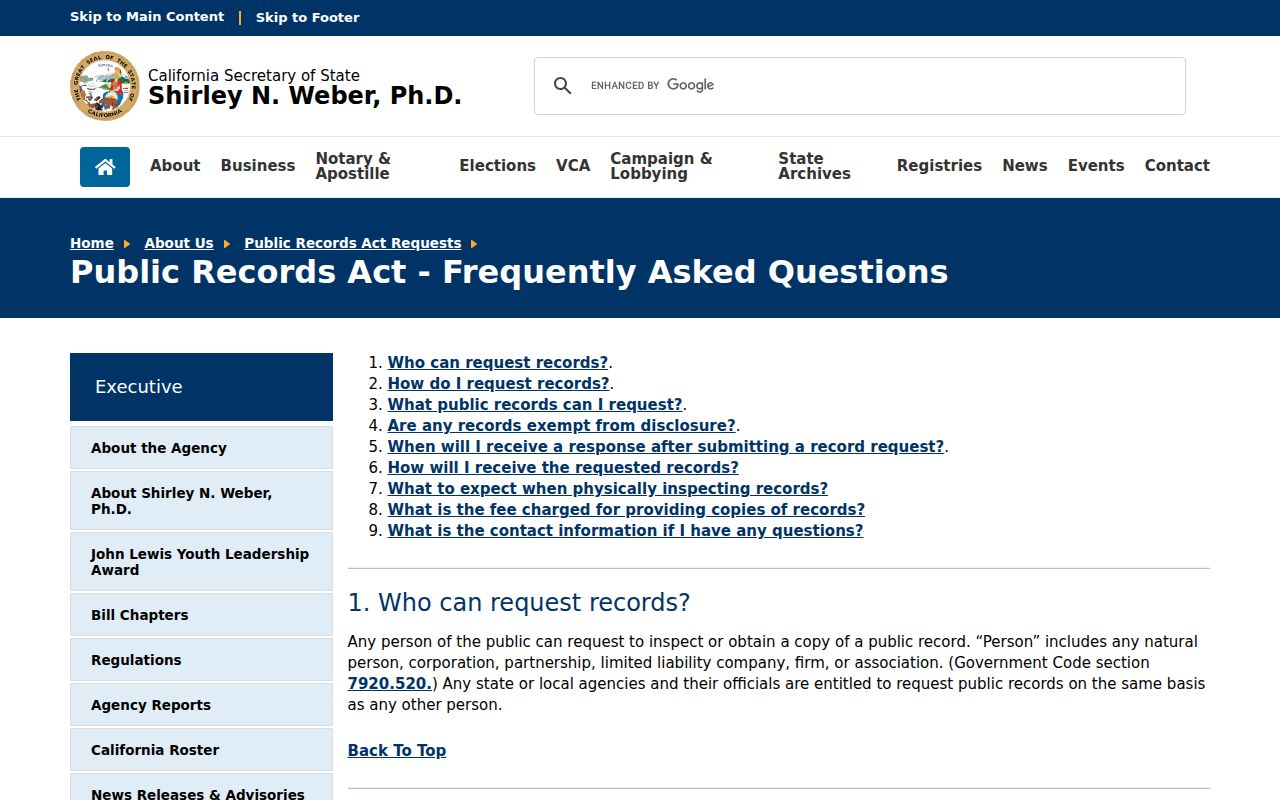
For a usable request, state the address, APN, community name, date range, record type, and likely department. Use ACR for deeds and county clerk products, Superior Court for probate, the city for city-held files, and the archive or interlibrary loan for historical publications.
Limits on Jurupa Valley Previous Residents Research
A past-resident trail can show a recorded owner, a printed occupant, a census household, a project participant, or a family connection. It cannot guarantee that a listed person was present for the whole year, reveal every household member, or convert an owner mailing address into proof of residence. Publication canvasses miss people, census boundaries shift, and a permit applicant may be a contractor or representative.
Safe at Home can shield a qualifying California participant with a substitute mailing address. Voter-file access has a statutorily approved-purpose limit, vital indexes are confidential, and sealed adoption, juvenile, and restricted court material may not be available. A precise request should respect those limits rather than trying to join fragments into a protected location.
Lawful personal use. Jurupa Valley house-history and genealogy research is appropriate when handled with care. Do not use previous-resident information to stalk, harass, intimidate, threaten, or track a living person against their wishes.
The strongest conclusion is modest: identify the source, date, role, and parcel link, then state what remains unconfirmed. That discipline keeps a previous residents search useful for family history, restoration, civic research, and heir work.